
How do we view Kali and its twelve areas or categories of study? My intention in this article is not to delve into the specific details of each category and analyze them extensively, but rather provide a brief overview of all the categories in a general and broad sense. This discussion aims to shed light on the evolving principles or the external forces which have influenced these areas, not only from within but also from without.
Many are already aware that categories such as single weapons, double weapons, long and short weapons, double end short weapons, long weapons, flexible weapons, and so on, did not come about by random chance. They were mostly a result of the increasing environmental, social, religious, and political pressures that awakened the Filipino tribes to the prospect of choosing to defend themselves and live, or be killed by those who did not have their best interests at heart.
Most of the Filipino weapons—not all—had practical, everyday, utilitarian origins. The weapons that developed over time were initially intended for everyday tasks such as hunting, agriculture, fishing, and so on, rather than taking enemy lives. However, perilous times had visited the Filipino people when those constructive tools had to evolve and become quite specialized weapons specifically used for self-preservation against invaders and even internal and external traitors. Any serious student of the history of the Philippines would readily admit the resourcefulness and adaptability of the Filipino people in utilizing anything and everything in their environments for their own survival and needs.
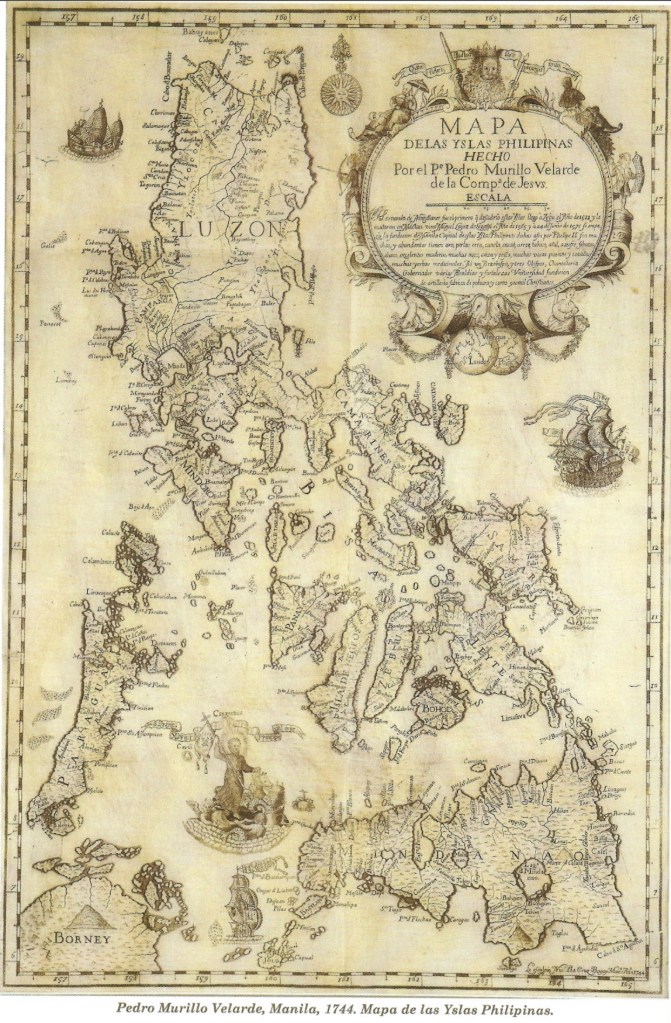
Centuries ago, the Philippines was a hierarchical society consisting of various indigenous peoples with distinct cultures and social strata. These groups were organized into barangays, small communities led by chiefs or Datus. The social arrangements of the time were shaped and influenced by various tribal beliefs rooted in animism and polytheism, before the arrival of Spanish colonizers who brought with them missionaries from groups such as the Jesuits, the Franciscans, and the Augustinians. In the southern parts of the Philippines, Islam had already been introduced through Arabs and merchants from the Malay Peninsula prior to the arrival of the Spanish.
My intention is not to delve too much into the history of the Philippines but rather to provide a brief overview of the historical context. It is important to note that the twelve categories or areas of study in Kali did not emerge in a historical vacuum. Instead, they were shaped by various factors during times of bloody conflicts, which are relevant to our discussion.
To study any aspect of the history of martial arts, it is not sufficient to be just great at the art or merely possess a closed system-knowledge of the art’s own history. It is crucial to become well-acquainted with the anthropology of the people and understand the various forces that have created and shaped the art and its underlying system of life. This task cannot be complete without considering the integrative nature of social, psychological, spiritual, political, economic, geographical, traditional, and cultural conflicts of the time. The twelve areas or categories in Kali are highly beneficial and practical, provided they are understood based on their essential principles rather than being memorized and blindly followed for traditional purposes. However, it is important to acknowledge the valuable wisdom that can be found in many great traditions, especially those originating from the Philippines. This truth cannot be denied or refuted.
Undoubtedly, the ever-evolving force that drives the necessary engine of the existential struggle is what provides and awakens the dormant impulse in human consciousness to solve the problems of life, eventually creating the necessary system of solutions. Many setbacks and failures happen to be inherent features, and an inescapable part of this process. However, that being said, the driving force behind it all doesn't care whatsoever whether it is Kali, or Jiu-jitsu, or calculus, or quantum mechanics….. In fact, when we examine the essential principles of Kali, we find the same shared symmetry, principles, and counterparts in all other human systems, howbeit, they exist in different shapes, configurations, expressions, symbols, and languages, which are discovered in numerous other arts and cultures—even arts that have nothing to do with martial arts.
That being said, we are now living in the 21st century, and our primary mindset cannot be the same as that of the people in ancient times. Humanity's complex social structures, laws, social norms, and affairs have changed compared to ancient times. Therefore, our current collective interpretation and understanding of the twelve areas of Filipino Kali are drastically different. By this, we mean that they are more suited to the exigencies of the current world conditions, rather than the struggling conditions of, for example, the Philippines during the 14th or 15th century.
To us, various categories or areas of the study of Kali are more like 12 all-encompassing principles rather than just memorizing 12 limited categories in Kali, right along with just several traditions or set of moves passed down to us.
We have not tossed out the essential aspects of the old view, but we believe its mindset needs to be entirely renewed and its base broadened. This is necessary in order to remain loyal to its ancient spirit on the one hand, and, on the other hand, to be able to absorb the exponential surge in the currents of a fast changing world.
Through this unstoppable process, the desire for compartmentalization will not be able to keep up with the forces of integration. And Kali, with its twelve areas of focus is like one tiny organism in the fast- moving river of life which has to wrestle with the forces of change.