
In martial arts, self-defense is a core principle, but equally vital is the ability to control the level of force applied in any confrontation. Mastering the spectrum of injury from minimal restraint to decisive incapacitation defines a skilled martial artist and reflects discipline, ethics, and situational awareness. This article explores why modulating force is essential in martial arts and how it shapes practitioners into responsible and effective fighters.
The Variation of Force:
Martial arts include a variety of techniques, such as joint locks, throws, strikes, and submissions, each capable of causing different levels of harm. A practitioner’s ability to select the appropriate force depends on their training, sense of justice, wisdom, intent, and context. This spectrum can be divided into three main categories:
- Control and Restraint: Techniques like joint locks, holds, or grappling allow a martial artist to neutralize a threat without causing significant injury. These are ideal in situations where a less harmful resolution is possible, such as restraining an aggressor without lasting damage.
- Temporary Incapacitation: Strikes, takedowns, or chokes can briefly disable an opponent, creating an opportunity to escape or gain control. When executed with precision, these methods cause pain or disorientation but avoid long-term damage, provided they are executed with control.
- Severe Injury or Lethal Force: Techniques repeatedly applied for extended periods, targeting critical areas such as: Persistent strikes to the head, throat, eyes, or spine, as well as chokes and joint breaks can result in serious injury or death. These are reserved for life-threatening situations where no other option exists.
Navigating this variation with fluidity distinguishes a novice from a master. It demands not only technical skill but also mental clarity and emotional restraint.
Why Control Matters:
- Ethical Responsibility:
Martial arts are rooted in philosophies that emphasize fearlessness, justice, respect, humility, and self-control. Most fighting systems teach that the goal is to protect, not to mindlessly destroy life. Using unnecessary force when a lesser response would suffice contradicts these values and risks unnecessary harm. A martial artist who can subdue an opponent with minimal injury demonstrates both skill and moral integrity. - Legal and Social Consequences:
In real-world scenarios, the level of force used can carry significant legal consequences. Laws in most countries differentiate between self-defense and unnecessary force, and a martial artist must justify their actions. Overwhelming an aggressor with disproportionate harm can lead to criminal charges, lawsuits, or social repercussions. By calibrating their response, practitioners safeguard themselves physically, legally, and socially. - Situational Adaptability:
Not every fight warrants maximum force. A disruptive friend, a psychotic killer, a drunk stranger, or a trained attacker with a knife each requires a tailored response. A martial artist trained to assess and adjust their force can resolve minor conflicts, subdue moderate threats, or decisively counter life-threatening attacks. This adaptability ensures effectiveness across varied scenarios.
Developing the ability to modulate force is a cornerstone of martial arts training. Here’s how practitioners refine this skill:
- Technical Precision: Repeated practice builds muscle memory and fine motor control, enabling martial artists to execute techniques with accuracy. For instance, a Brazilian Jiu-Jitsu practitioner learns to apply a choke just enough to subdue without causing severe harm.
- Sparring and Scenarios: Controlled sparring and scenario-based training simulate real-world encounters, teaching students to adapt their responses under pressure. Instructors often emphasize the level of force during these training sessions. Protective gears are essential.
- Mental Conditioning: Developing mental and emotional maturity to manage fluctuations in high-stress situations is essential. This capacity enables fighters to assess scenarios accurately and apply the precise necessary force.
A martial artist’s ability to control the level of injury reflects their mastery. It shows not just physical prowess but a deep understanding of the art’s purpose: to protect life, not mindlessly destroy it. Modern icons like Rickson Gracie advocate for efficiency and control over brute force.
In practice, this mastery appears in subtle ways. A judoka might redirect an attacker’s momentum into a gentle takedown, or a Muay Thai fighter might use a controlled push kick to create distance rather than a devastating roundhouse. These choices highlight the practitioner’s ability to protect themselves and others while minimizing unnecessary damage.
In short, the ability to modulate force in martial arts is more than a technical skill—it’s a philosophy, a responsibility, and a sign of true expertise. By training to control the level of injury, martial artists embody the balance of power and restraint that defines their craft. In a world where conflicts are inevitable, this skill ensures they can defend with precision, protect with justice, and uphold the timeless principles of their art. Whether in the dojo or on the street, the martial artist who wields force with discernment is not just a fighter but a guardian of humanity.
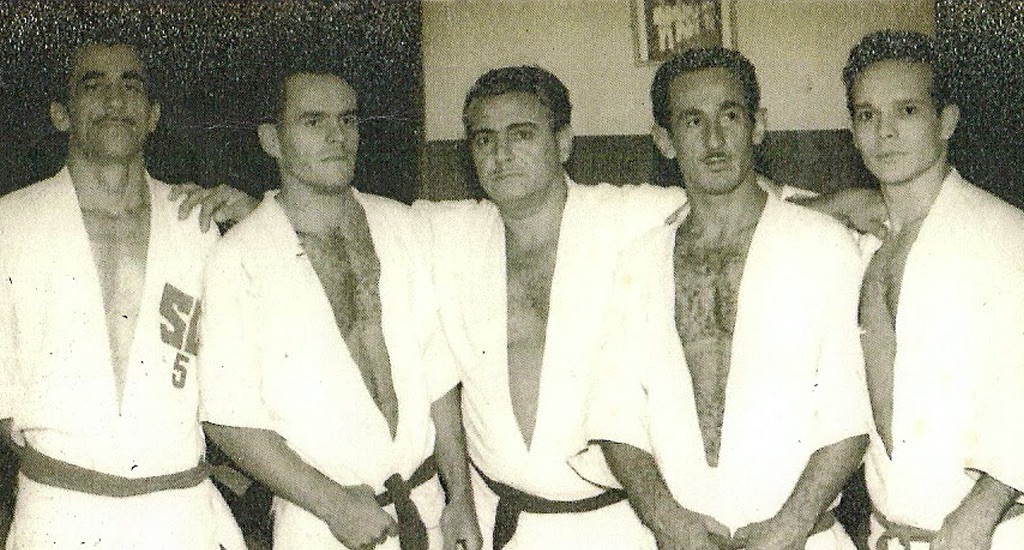
Photo: Oswaldo Fadda in the center