Most (not all) martial arts systems have three layers:
1) Moves that are to be used for restraints and controls.
2) Moves that cause some damage, but the damages are reversible. So, the receiver can heal up 100% and get back to normal.
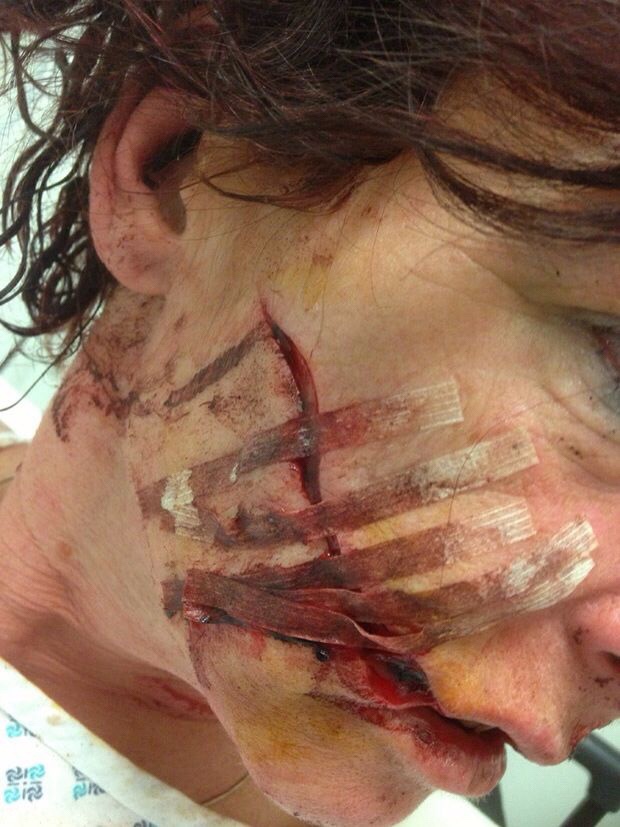
3) Moves that can cause permanent damage and send the person to the hospital, OR send them to this other place where the Webster Dictionary calls it——“the cemetery”or “the burial ground”.
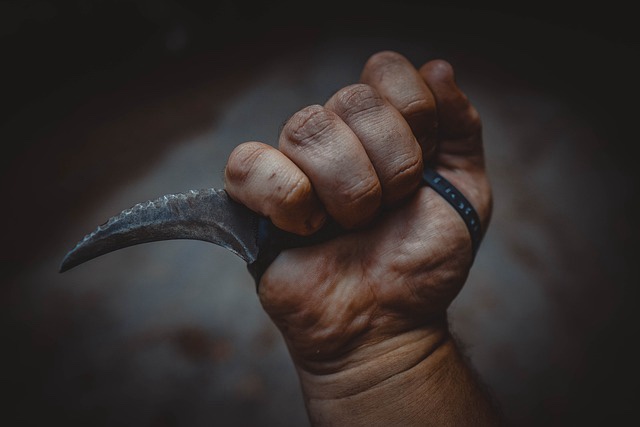
In Kali and or FMA, the arts are mainly based on weapons, particularly Blades and sticks. we know that weaponry-related moves can be transposed to empty hand, but rarely ever do I see it done without weapons. Most practitioners move with a blade, with the intention of self-defense which is great and nothing wrong with it. It is absolutely necessary, and I think no body has a complete understanding of self-defense unless they are educated in the weapons systems of the Philippines along with other adaptive and combative systems. However, if one’s focus is “only” on FMA and nothing else, they may not have considered that depending on where they live, they may rarely ever need to pull out a knife to defend themselves. The moment you pull out the blade in a fight, unless fully justified, you would already be knee-deep in legal issues, especially if you cut some whiner in a bad area of their body and the person either loses a body function permanently or worse yet, he dies. So, if you are going to pull out a blade, make sure it’s absolutely necessary. Blades are not toys that one can pull them out and use them on someone who is just throwing punches (with some exceptions of course), or flipping you off, or any of average petty fights that occur in the streets. One mistake——one wrong decision on your part and your life would change forever. You should consider training other systems as well, and consider using the weapons as the last necessary tool in any average fight. Weapons are for plan D and not plan A, depending on certain constraints.
I know these issues are different from country to country, place to place, state to state, and even neighborhood to neighborhood. Also, I fully understand and am aware that in some parts of the world, the mentality of kill or be killed is still alive and well. But all we are saying is that if FMA is all you know, and your entire self-defense relies on that blade that you are carrying on your waist or in your pocket, then yes, most likely you will survive the fight, but that’s not all that you should be considering. Maybe you should ask yourself, what is going to happen to the quality of your life after the altercation using the blade on someone who was just stupid and maybe drunk and threw a few punches at you, and you could have just taken him to the ground and slap him few times, and that’s all that were needed———but instead, emotionally you lost it, and took your blade out and intentionally or accidentally murdered the clown, or put some irreversible damages on him. Now what! Where is that going to get you?
At our school the role of the weapons are first and foremost intended for attributional development and then, its self-defense part is secondary. In the mid to late 80’s when I was speaking to Sifu Dan Inosanto, he was mentioning all of these things way back then. The more deadly the weapon the more responsibility it would carry with it. We live in the 21st century and not the 16th century Philippines. In the ancient times it was much easier to put the deadly weapons to use. We can still use them, and “must” use them, when necessary, but we need to be clearheaded about them and not treat them as toys. The weapons demand alot of respect which they deserve. If you pull one out, make sure you know the laws and make sure it is justified.
Nowadays, we must know a lot more than JUST filipino martial arts. FMA is just a means to an end, and not the end itself. Our vision of Kali/FMA goes much deeper than merely its self-defense perspective——to us, it’s a developmental system.
We do not just think of FMA as the most efficient system of weaponry to take another person’s life, though that would be a true statement, but we think, it goes much deeper than that, which means our view of it has to take in the modern time’s conditions and all its exigencies, and not its ancient mindset-approach which was developed under a very different ethical, sociopolitical, and environmental pressures than what we have in the 21st century. The legal system (if I may use that phrase) of those ancients cultures were developed under very different types of expectations, rules, and consequences, as suppose to what we have in modern times.
In martial arts, one should put all the possibilities on the table as viable options, “but” at first, choose the lowest common denominator (LCD)——meaning, consider the maximum health and safety for yourself first, and then taking into account the least amount of damage required: 1) To intercept your opponents intentions, AND 2) To educate your opponent about his or her own stupidities, while considering the optimum legal results. That means, preventing any unnecessary damages “after” considering your own health and safety.
However, if instead, you choose to commit yourself to the highest common denominator (HCD, maximum, irrational, and unnecessary damage), then you can no longer undo the damage——it’s all done! Making such a decision would not be wise at all, because to a wise person it’s nothing but loss and regret! Part of the martial arts training is to help students become awakened to these intricacies.