
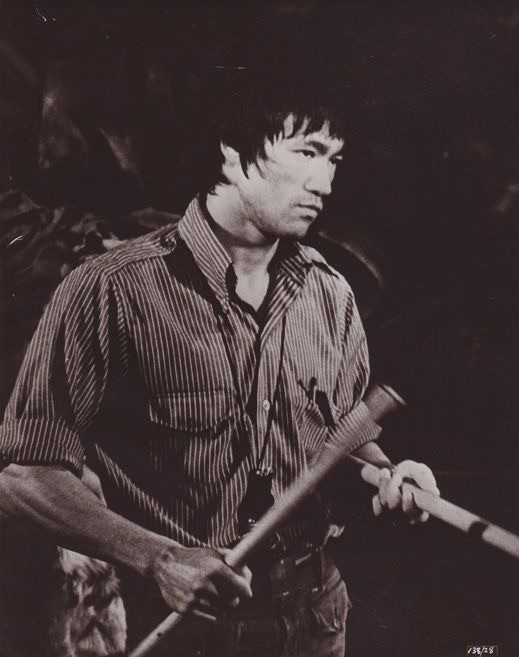
Knowledge and understanding are distinct yet interconnected concepts, often confused in discussions of cognition, learning, and wisdom. Knowledge is the accumulation of facts, data, or skills gained through experience, education, or observation—the “what” of learning, like knowing that 2+2 equals 4 or that gravity causes objects to fall. Understanding, however, delves deeper, grasping the “why” and “how” to connect and apply knowledge meaningfully. I have purposefully written this blog post through the lens of a non-martial arts perspective, designed to encourage martial arts practitioners to think outside the box. All principles discussed within the article are directly applicable to martial arts practices and philosophies, such as adapting techniques fluidly or intuiting a sparring partner’s intent. While knowledge lays the foundation, understanding transforms information into insight. This statement explores their differences, drawing on authoritative references to illuminate the distinction.
Knowledge is a collection of verifiable information or abilities. The Stanford Encyclopedia of Philosophy (2020) describes knowledge as “justified true belief,” focusing on propositional facts, like knowing water boils at 100°C at standard pressure (Zalta, 2020). It can be explicit, such as textbook definitions, or tacit, like riding a bike, as Michael Polanyi notes in The Tacit Dimension (1966). Polanyi emphasizes that tacit knowledge involves skills one performs without always articulating, yet knowledge alone doesn’t ensure depth. A student might memorize a formula without grasping its implications, showing the limits of rote learning.
Understanding involves synthesizing knowledge to uncover relationships and meaning. Philosopher Jonathan Kvanvig, in The Value of Knowledge and the Pursuit of Understanding (2003), calls understanding an “epistemic achievement,” requiring coherence and explanatory depth. For instance, understanding why water boils at 100°C involves grasping atmospheric pressure and molecular kinetics, not just the fact. This aligns with Bloom’s revised taxonomy (Anderson & Krathwohl, 2001), where understanding surpasses recall, enabling interpretation or inference—a leap from memorization.
Practically, the distinction shines in application. A medical student knows disease symptoms, but a doctor understands their interplay for a diagnosis. The Journal of Educational Psychology (2006) notes understanding allows knowledge transfer to new contexts, unlike inert facts (Pellegrino & Hilton, 2012). A programmer knowing syntax but designing functional code shows understanding, echoing Ludwig Wittgenstein’s Philosophical Investigations (1953), where understanding is a dynamic ability to navigate concepts, not a static possession.
Cognitive science offers clarity. Daniel Willingham’s Why Don’t Students Like School? (2009) explains knowledge as stored facts or procedures, while understanding builds mental models for problem-solving, like an engineer grasping a bridge’s integrity beyond its materials. The Cambridge Handbook of Expertise and Expert Performance (2018) adds that experts excel not in knowledge volume but in organizing and applying it meaningfully (Ericsson et al., 2018), highlighting understanding’s role.
Philosophically, understanding carries insight knowledge lacks. Martin Heidegger’s Being and Time (1927) frames understanding as engaging phenomena contextually, beyond isolated facts. John Dewey’s Experience and Education (1938) suggests understanding emerges from reflective experience, making knowledge personally significant.
In summary, knowledge is raw material—facts or skills—while understanding makes sense of it, seeing implications and applying it flexibly. Knowledge can exist without insight, but understanding needs knowledge as its base. References like Bloom, Kvanvig, and Willingham show understanding bridges knowing to doing, information to wisdom, a principle vital in fields like martial arts, where mastery lies not in techniques known but in their intuitive grasp.
References:
- Anderson, L. W., & Krathwohl, D. R. (2001). A Taxonomy for Learning, Teaching, and Assessing. Longman.
- Dewey, J. (1938). Experience and Education. Kappa Delta Pi.
- Ericsson, K. A., et al. (2018). The Cambridge Handbook of Expertise and Expert Performance. Cambridge University Press.
- Heidegger, M. (1927). Being and Time. Harper & Row.
- Kvanvig, J. L. (2003). The Value of Knowledge and the Pursuit of Understanding. Cambridge University Press.
- Pellegrino, J. W., & Hilton, M. L. (2012). Education for Life and Work. National Academies Press.
- Polanyi, M. (1966). The Tacit Dimension. University of Chicago Press.
- Willingham, D. T. (2009). Why Don’t Students Like School?. Jossey-Bass.
- Wittgenstein, L. (1953). Philosophical Investigations. Blackwell.
- Zalta, E. N. (Ed.). (2020). Stanford Encyclopedia of Philosophy. Stanford University.