
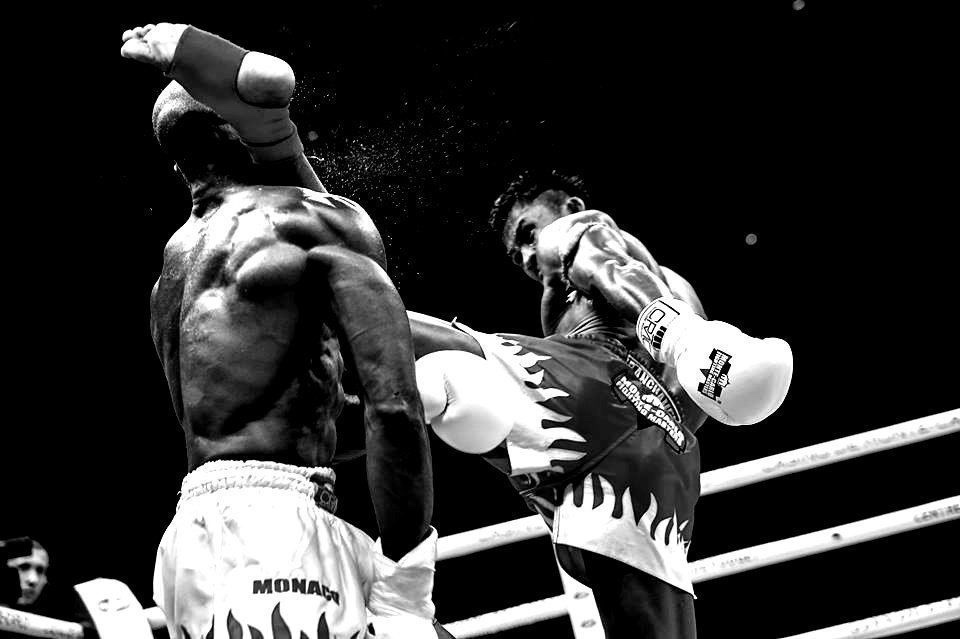
A fighter should be able to take some measure of punishment to areas such as: the head, elbows, forearms, fists, midsection/abdomen, thighs, knees, shins, and feet.
Pain tolerance is the maximum level of pain that a person is able to tolerate. It is distinct from pain threshold, which is the point at which pain begins to be felt. The perception of pain that goes into pain tolerance has two main components: 1) The biological component—for example, being hit by an elbow or being arm-bard which activates pain receptors, 2) The brain’s own perception of pain which has to do with how much focus is spent paying attention to or ignoring the pain. When pain impulse is generated there are pathways and processes by which endogenous opioids, like beta endorphin, dynorphin and enkephalin, as well as the baroreceptors in the aortic arch and carotid artery become activated, and respond to the regulatory and cardiovascular parameters both directly or indirectly, ameliorating the pain threshold/tolerance.
Pain tolerance and threshold are different from person to person. This variation has to do with complex interactions between the nerves and the brain. Some of the factors that have a direct influence on pain are: genetics, age, sex, chronic illness, mental illness, stress, social isolation, past experiences, and expectations…..
Without getting too deep into this topic, it’s advisable to train with some measure of a solid contact, so you can build a better and a more efficient pain complex (tolerance)——especially if your upbringing and learned coping strategies have not prepared you in how you should think, feel, or react to a painful experience.
If you are not a professional fighter, you do not need to waste time kicking banana trees to toughen your shins, but as stated above, you don’t want to be shocked when you get hit either. it’s much wiser to spend 95% of your training in avoiding to get hit than training 95% of the time to have as much IQ as a heavy bag. Howbeit, a certain subjective measure of pain tolerance is an absolute must, and you should expect perceiving such a pain through actual training and sparring. As time goes, you should also change your expectation of the perception of the pain. Pain has both a physical dimension and an inseparable psychological interpretation. The important take away is that, as you increase your pain tolerance, your psychological expectation and interpretation of it must also change.