Most teaching environments consist of various levels of students and instructors. These students and instructors are rightly organized into different levels and ranks based on: actual learning, real practical skills, personal capacity, time dedicated to the system itself, self-development, mentoring others, and teamwork.
A couple of examples: In military there are various different ranks that are recognized and strictly followed. Similarly, at university campuses there are distinct levels of academia and with it comes rules of etiquacy and teaching authority which are strictly adhered to.
In a training class, there should be rules that govern a healthy atmosphere of respect with regards to individual ranks and merits. For example, when a blue belt asks a question about a technique, a concept, or a principle, it is logical to think that the highest ranking instructor on the mat or on the pavement would be the one responsible to answer that question. Everyone else should only be ears. The question of that blue belt, or purple belt or brown belt CAN be answered indirectly by another person in the room in the form of a “suggestive-question” (e.g, can I do it this way? Would it be correct for me to think of it as this….). But this suggestive-question must again be directed to the highest ranking person in the class and not the person who had originally asked that question. This way further light may be shed on the original question, without stepping outside of one’s rank in the room. But when a blue belt asks a question from a highest ranking instructor in the room, a student who may be in the rank of a white belt (any stripe) should never directly answer that question even if that answer is correct and with the best of intentions. Same thing, if a purple belt asks a question, a blue belt should not try to answer it when higher ranking students and teachers are present there. That would definitely be disrespectful and would undermine the blue belt’s or the purple belt’s hard-earned merit. Imagine in a hypothetical scenario where a Colonel in military asks a question from one of the major Generals and a Private jumps in and wants to answer that question.
This is why organization and order in the operations and ranks, no matter what field we are talking, are quite important. If it gets ignored or down-played, then chaos and disorder would ensue. And when that happens, the clear lines between right and wrong, good and bad, high and low, weakness and strength, knowledge and ignorance ……all become blurry and lost.
In conclusion, order and discipline (two necessary components of Rank and Etiquecy) play major roles in the expedient progress of all. The more organized and ordered the system is, the more urgent, efficient, methodical, and clear-headed , we can act.
Coach Shahram
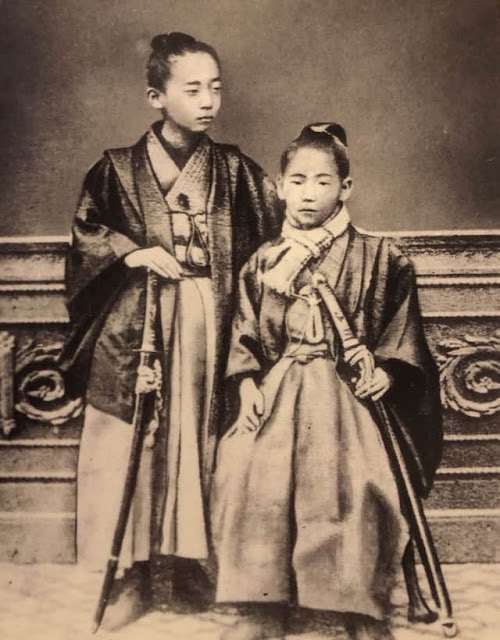
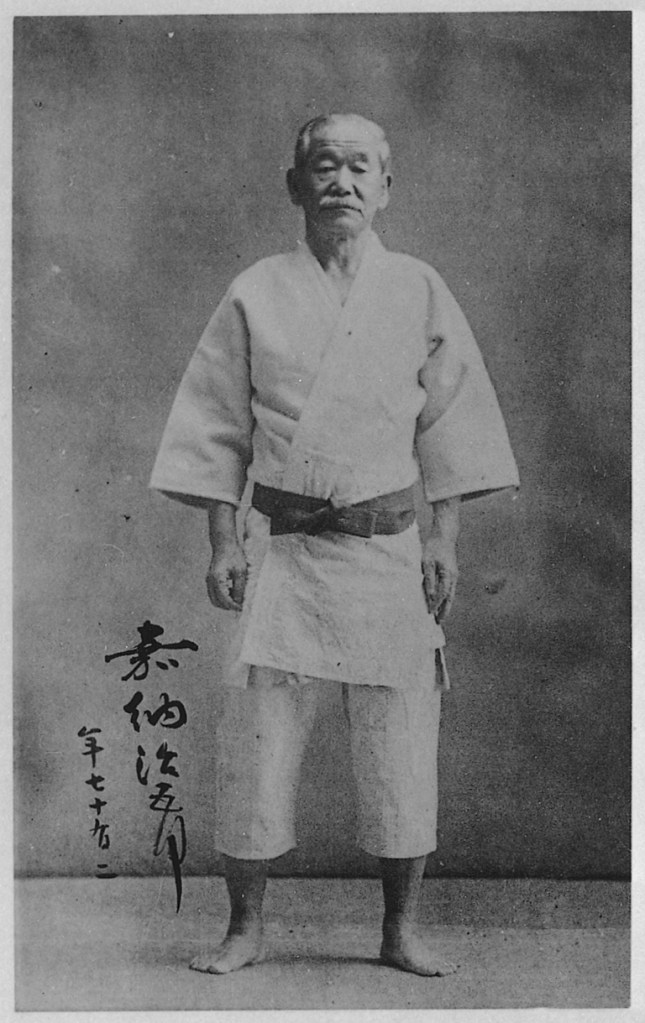
Photo: Professor Jigoro Kano, right, at age 11, and as an adult, courtesy of the Kodokan and International Judo Federation